
rooted in Santa Barbara
THE VINEYARDS


Santa Barbara Wine Country
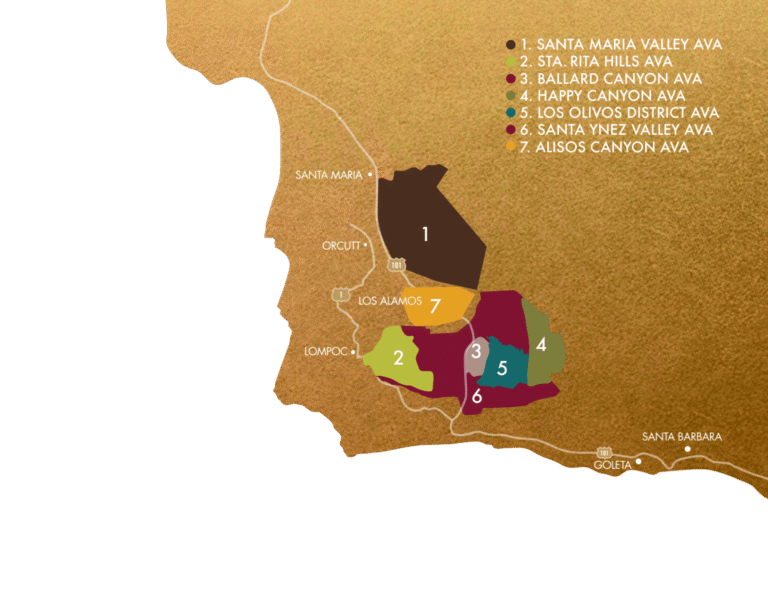
As a winegrowing region, from the air to the earth, Santa Barbara is defined by the Pacific Ocean.
Once a prehistoric seabed, our soils are diverse across the county but are marked by sedimentary marine material. Sandy vineyards are common, as are limestone and diatomaceous (fossil) material. Unique to Santa Barbara, our mountain ranges were formed in an East to West orientation as a result of a bend in the San Andreas fault system. This anomaly funnels cold air directly off the Pacific through our valleys and across our rolling hills, cooling the grapes and creating a fog layer common in the mornings and evenings.
We consider it a privilege to grow and craft wines in this rare corner of the world.
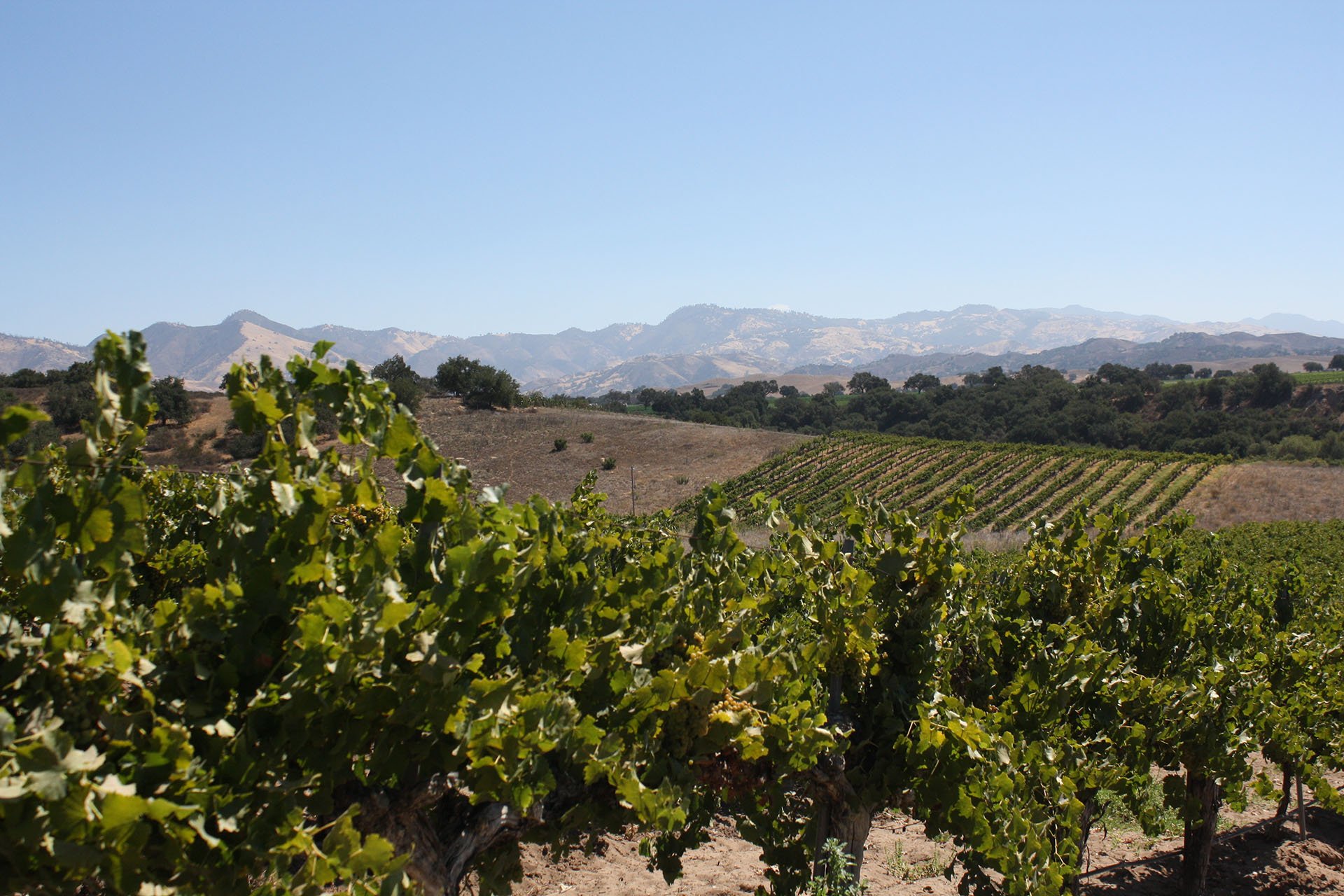
Jurassic Vineyard
Jurassic Vineyard is a gem of California winegrowing heritage. This “Old Vine” Chenin Blanc was planted by the Firestone family in 1978 on its own roots. Oriented on a slope, soils are pure sand at the top and gradually more structured towards the base, with limestone rocks visible throughout. Affectionately named “Jurassic Park” as a nod to the prevalence of fossils in the area, this vineyard is isolated off the main road and surrounded by oil pumpjacks, giving a distinct sense of bygone eras.
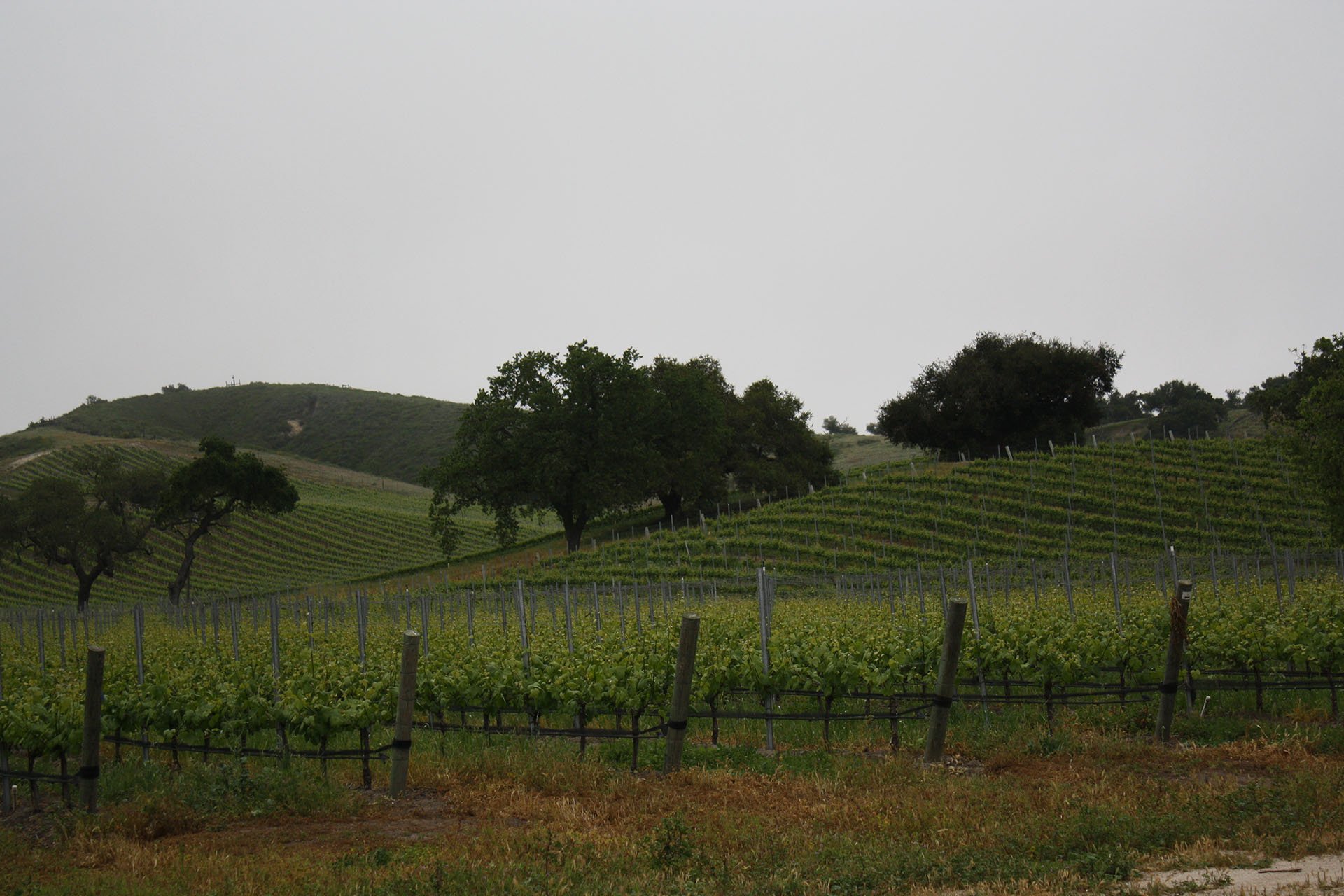
Nolan Vineyard
Sitting at the north-eastern edge of Alisos Canyon, Nolan Vineyard is one of the most exciting recent plantings in the region. Developed across myriad slopes and hillsides, Nolan is notable for its diversity of terrain and varietals. Sandy-loam soils with limestone outcroppings give us deep wines with developed tannins and depth. The draw of cooling marine air through the canyon helps to moderate temperatures in the mornings and nights, while daytime sun exposure allows for steady, even ripening.